

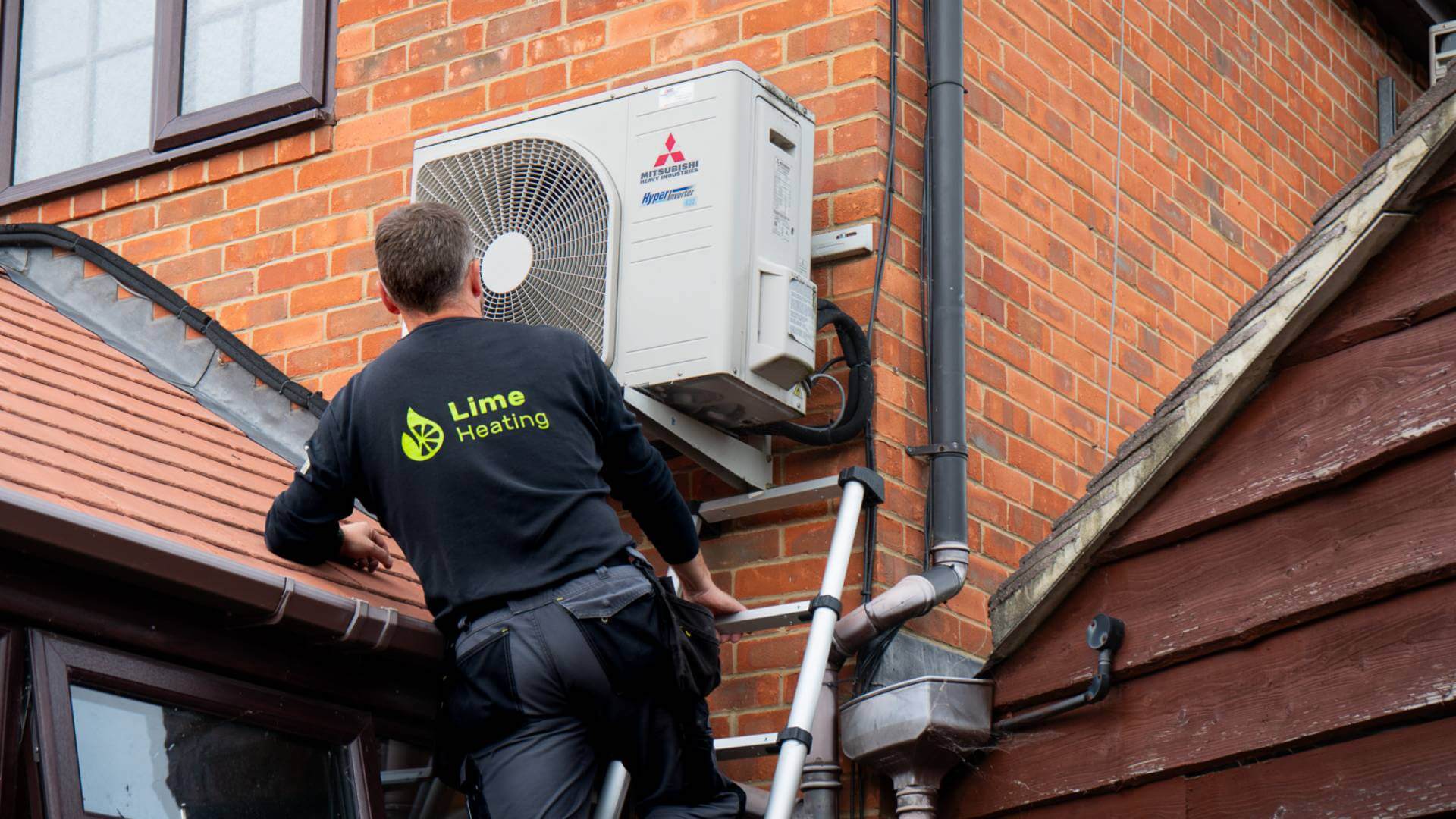
Air conditioning in UK homes used to be a niche choice: something for luxury new builds or commercial offices. Not anymore. After consecutive summers pushing past 35°C, with local highs even hitting the record-breaking 40ºC mark, it’s a subject many local homeowners and businesses can’t ignore.
When it comes to making the decision of whether air conditioning is right for you, there’s a lot to consider. The market is full of systems that vary enormously in quality, efficiency, and suitability. This guide is designed to give you the complete picture — so that by the time you speak to an installer, you know exactly what you’re looking for and what the right questions are.
If you’re already at the stage of looking for quotes, you can make an enquiry with Lime Heating here. If you’re still researching, we’ve put together an air conditioning installation guide for you below.
Why UK homes struggle with heat
Understanding why air conditioning may be a good choice for your home requires understanding why those properties get so hot in the first place.
UK building regulations have historically focused on heat retention and keeping warmth in during cold winters. The result is progressively more well-insulated properties, doing what they’re designed to do: trapping heat. In January, that’s ideal. In July, it turns a house into a slow cooker.
South-facing rooms: everyone loves a south-facing property for bringing light into your home and the dream of sunny summer BBQs in the garden. However, a south-facing bedroom or home office can feel like a greenhouse at times. During a heatwave, many modern homes reach sweltering temperatures.
Loft conversions are worse still. Heat rises naturally, and a loft room sits directly beneath a roof that’s been absorbing solar radiation all day. Even with Velux windows open, ventilation rarely keeps pace with the heat gain.
Air conditioning addresses this directly by removing heat from the air inside and expelling it outside, regardless of how well insulated the room is.
If you’ve been thinking about installation, we’re going to be covering:
- The four types of air conditioning explained
- How much does air conditioning cost?
- Are air conditioning units expensive to run?
- Do you need planning permission for air conditioning?
- How is air conditioning installed?
- The pros and cons of air conditioning
The four types of air conditioning explained
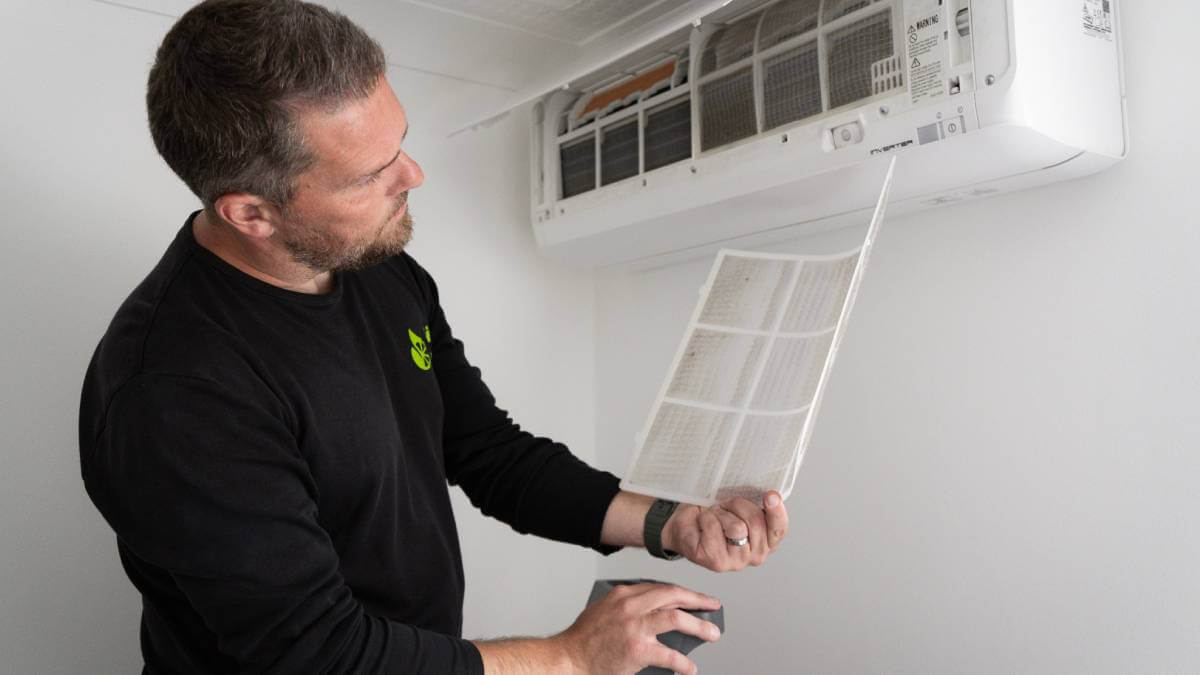
Understanding how air conditioning works helps when choosing a system. The indoor unit draws warm room air across a cold evaporator coil, which absorbs the heat. The refrigerant carries that heat to the outdoor unit, which expels it outside. The cooled air is circulated back into the room. In heating mode, the process reverses — heat is extracted from outside air (even in cold weather) and delivered into the room.
Wall-mounted split systems
The split system is the most widely installed type of domestic air conditioning in the UK, and it’s a good starting point for most homeowners.
The system has two components: an indoor unit mounted on the wall, typically at high level, and an outdoor compressor unit fixed to an external wall. They’re connected by refrigerant pipework, an electrical cable, and a condensate drain pipe, all of which run through a core hole — usually around 65mm in diameter — drilled through the external wall.
Modern split systems use inverter compressor technology, which varies the compressor speed to match demand rather than running at full power constantly. This makes them significantly more efficient than older on/off designs, and a key reason running costs are lower than most people fear.
Air conditioning for a bedroom is one of the most popular applications — and one of the most impactful. A cool bedroom at night makes a measurable difference to sleep quality during summer, and a well-chosen split system runs quietly enough in sleep mode that you won’t notice it’s on.
Key considerations when choosing a split system:
- BTU/kW output: The capacity of the unit must match the size of the room. An undersized unit will run continuously and never reach the target temperature. An oversized unit will cool too quickly without properly dehumidifying the air. A reputable installer will calculate the correct capacity for your room based on its dimensions, window area, orientation, and insulation — not just floor area.
- Noise levels: Indoor units vary in noise output. For bedrooms, look for units rated at 19–22dB in sleep mode. Most premium units from Mitsubishi Electric, Daikin, and Fujitsu fall within this range.
- Positioning: The indoor unit needs to be positioned to distribute air evenly across the room without blowing directly onto the occupants or creating cold spots. The outdoor unit needs adequate clearance for airflow, shouldn’t be positioned where noise will disturb neighbours, and ideally should be in shade rather than direct sunlight to maximise efficiency.
Typical installed cost: £1,500 – £2,500 for a single room, including labour and standard installation materials.
Multi-split systems
A multi-split system uses one outdoor unit to serve multiple indoor units in different rooms. The outdoor unit is larger than a standard single-room unit, and separate refrigerant circuits run to each indoor unit.
The key advantage over installing separate single-split systems in each room is that you only need one outdoor unit — important for properties where outdoor space or aesthetics are a constraint. The outdoor unit is also typically quieter than multiple smaller units combined.
The trade-off is flexibility. With a multi-split system, all indoor units share the outdoor unit’s capacity. If all rooms call for cooling simultaneously, performance can be reduced compared to each room having its own dedicated system. Some multi-split systems also require all indoor units to operate in the same mode — all cooling or all heating — which can be a limitation in transitional seasons when different rooms have different needs.
Typical installed cost: From £3,000 for two rooms, rising to £5,000–£8,000+ for four or five rooms, depending on system specification.
Ducted systems
Ducted systems hide everything in the loft or ceiling void, delivering conditioned air through discreet ceiling vents with no visible wall-mounted units. They’re the most aesthetically pleasing option and suit whole-home and industrial coverage, but require significant ceiling void space and are best suited to new builds or major renovations rather than standard retrofits. For most homes, a split or multi-split system is the more practical choice.
Portable units
Portable units plug into a standard socket and vent through a window — no installation required. Less efficient and noisier than split systems, they also lack many of the benefits of a fixed system. However, they do provide a partial solution for when a permanent installation isn’t possible.
How much does air conditioning cost?
One of the biggest questions homeowners ask is how much air conditioning installation actually costs. The answer depends on the type of system you choose, how many rooms you want to cool, and how straightforward the installation is. While the upfront investment can feel significant, modern systems are far more energy efficient than many people expect — and when spread over the lifespan of the unit, the long-term value is often better than anticipated.
Installation costs
The figures quoted by most installers — and on our service page — are guides. Understanding what drives costs up or down helps you evaluate quotes accurately.
What’s included in a standard installation:
- The indoor and outdoor units
- Refrigerant pipework between the units
- Electrical connection from the indoor unit to an isolator switch (connecting to your consumer unit may be quoted separately if additional circuit work is needed)
- Condensate drain pipe
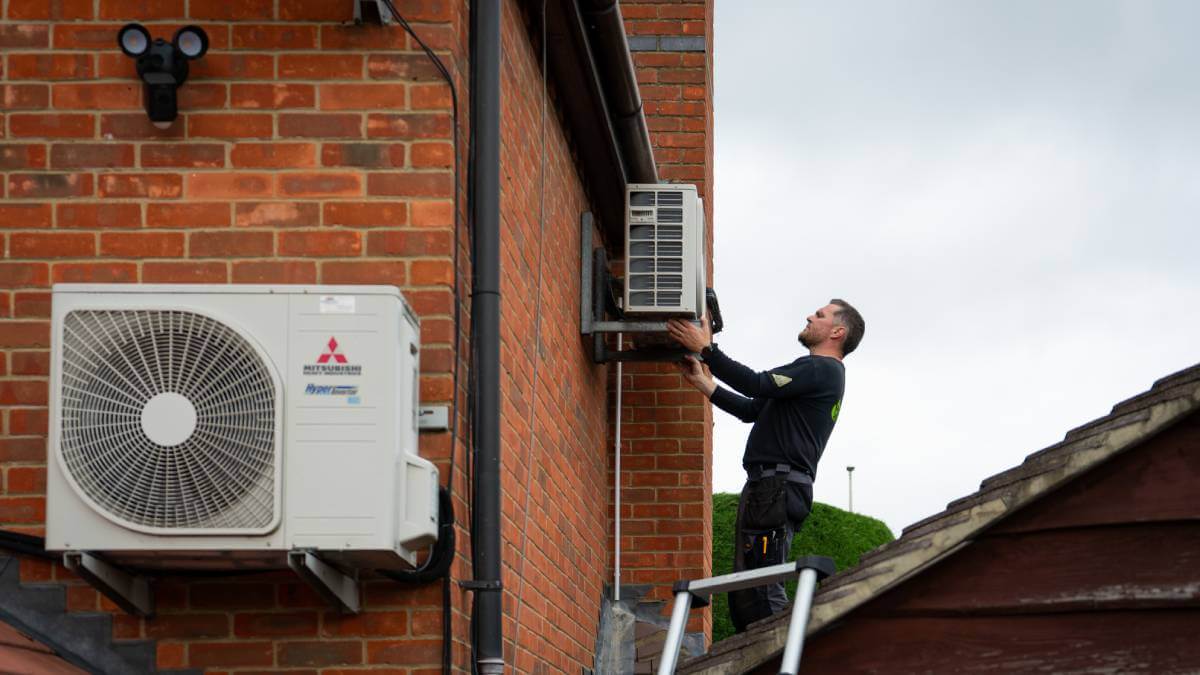
- Plastic trunking to protect and conceal pipe runs on external walls
- Brackets for the outdoor unit
- Labour
What can increase the cost:
- Long pipe runs between indoor and outdoor units (the longer the run, the more materials and labour)
- Difficult access — scaffolding, working at height, or routing pipes through complex building fabric
- Additional electrical work if a new circuit is required from the consumer unit
- High-specification units with premium features (Wi-Fi, air purification, ultra-low noise)
- Multi-zone systems with complex pipework
What can reduce the cost:
- Simple, short pipe runs
- A straightforward outdoor unit location with good access
Running costs — are air conditioning units expensive to run?
Running costs depend on the system’s efficiency rating, how often you use it, and at what temperature you run it but modern systems are far cheaper to operate than their reputation suggests.
Servicing costs
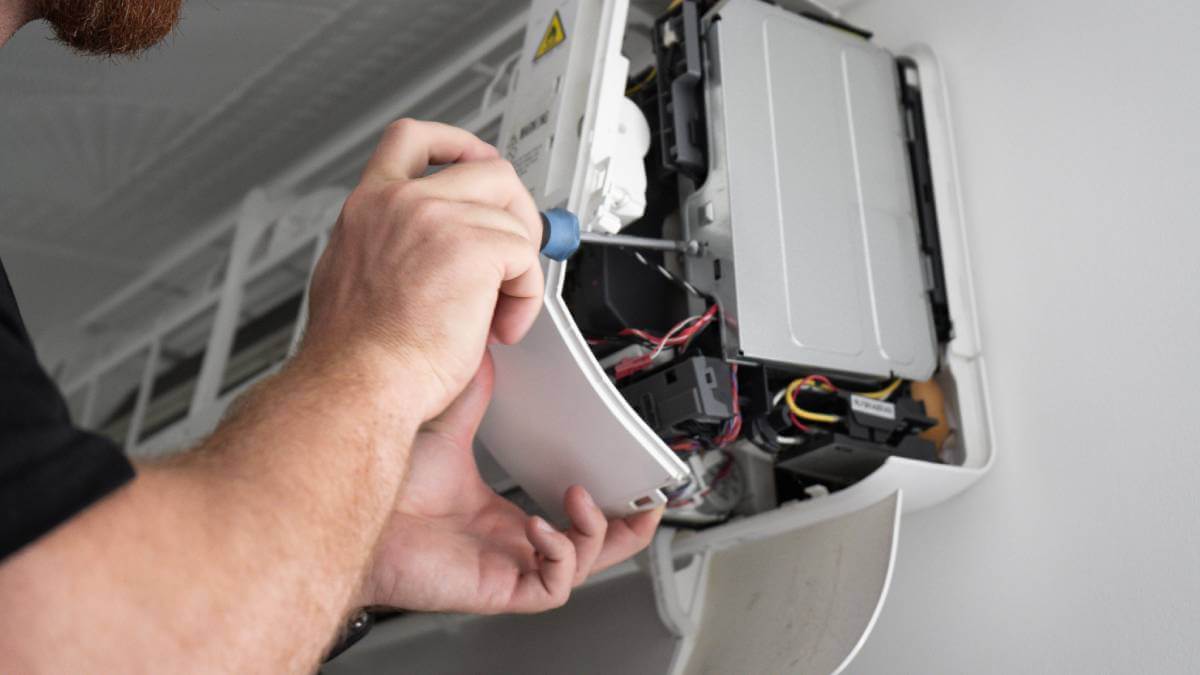
Budget £80 – £150 per year for an annual service. A service typically includes cleaning the filters and coils, checking refrigerant levels, inspecting electrical connections, testing the drainage, and verifying the system is operating at the correct efficiency. Skipping annual servicing shortens the life of the system and can void the manufacturer warranty. For heavy, continuous usage, more frequent services may be recommended.
Long-term value
A quality split system from a reputable manufacturer, properly installed and annually serviced, should last 15–20 years. Spread the installation cost over that period and the annual cost of ownership is lower than most people assume — particularly for systems capable of providing heating as well as cooling, which can potentially reduce the load on your boiler during spring and autumn.
Do you need planning permission for air conditioning?
Planning permission is one of the most common concerns for homeowners considering air conditioning installation. In many cases, domestic systems can be installed under permitted development rights without the need for a formal application. However, there are important exceptions for listed buildings, conservation areas, flats, and certain outdoor unit locations, so it’s worth understanding the rules before work begins.
When you don’t need permission
Installing an air conditioning outdoor unit on the rear or side wall of a detached, semi-detached, or terraced house is generally covered by permitted development rights under Class A of the Town and Country Planning (General Permitted Development) Order. No planning application is required.
When you do need permission
- Conservation areas: If your property is in a designated conservation area, permitted development rights are restricted. Outdoor units visible from a highway or public open space require planning permission. This affects a number of properties across Buckingham town centre, parts of Olney, Woburn, Newport Pagnell, Wolverton and various villages across Buckinghamshire and Northamptonshire. Check your local council’s planning portal to confirm whether your property is in a conservation area before proceeding.
- Listed buildings: Any external alteration to a listed building — including drilling through external walls for pipework — requires listed building consent in addition to any planning permission. This is a separate application from standard planning permission and carries significant penalties if work is carried out without it.
- Flats: If you own a leasehold flat, you’ll need written consent from your freeholder or management company before any installation involving external walls or communal areas. If you’re a tenant, you’ll need written permission from your landlord for any permanent installation.
- Front elevations: An outdoor unit visible from the road on the front elevation of any property — including those not in conservation areas — may require planning permission. Rear and side elevations are generally unaffected.
F-Gas regulations
Separate from planning, air conditioning systems using refrigerants are regulated under UK F-Gas regulations. Any engineer who handles refrigerant — installing, maintaining, or decommissioning a system — must hold a valid F-Gas qualification. This is a legal requirement, not optional.
Always confirm your installer is F-Gas certified before work begins. Reputable installers will confirm this without being asked. If an installer is vague about their F-Gas status, treat it as a serious red flag.
How is air conditioning installed?
A standard single-room split system is typically completed in one day. The main stages are:
- Survey and positioning: The engineer confirms the planned locations for the indoor and outdoor units and the pipework route before work begins
- Indoor unit installation: The unit is fixed to the wall and connected to the refrigerant pipes, electrical cable, and condensate drain, which run through a core hole in the external wall
- Outdoor unit installation: The compressor is mounted on external wall brackets and connected to the pipework from inside, with external pipe runs enclosed in trunking
- Commissioning: The system is vacuumed, charged with refrigerant, and tested
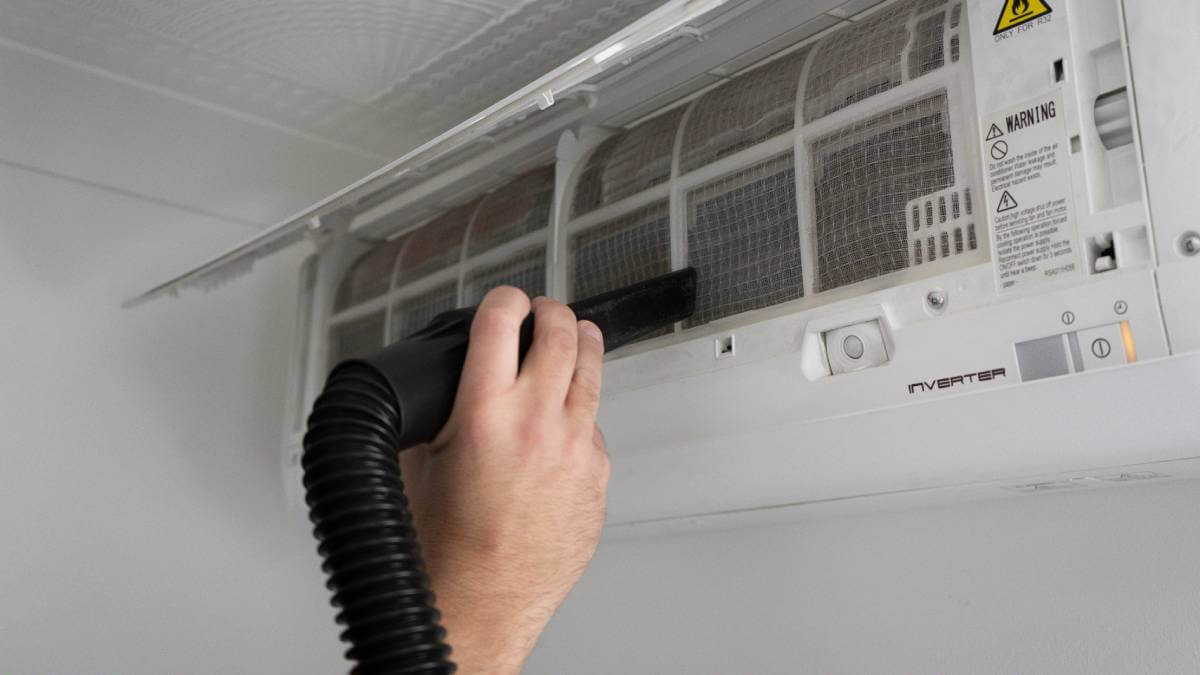
- Handover: You’ll be shown how to operate the system and how to clean the filters
The pros and cons of air conditioning
Air conditioning is becoming increasingly common in UK homes as summers become hotter and periods of extreme heat last longer. For many people, it transforms bedrooms, home offices, and living spaces into comfortable environments year-round. However, like any major home improvement, there are advantages and drawbacks to consider — from installation costs and energy use to comfort, air quality, and long-term practicality.
Is it worth getting air conditioning in the UK?
For most homeowners who struggle with summer heat, yes — and increasingly so. A cool bedroom genuinely changes how you sleep through summer. A comfortable home office changes how you work. A conservatory that was only usable for a brief window in the right weather conditions becomes a room you use all year round. The most common thing people say after installing air conditioning is that they wish they’d done it sooner!
We take the need to protect ourselves against the cold seriously, but the expectation that many of us still have in this country is that we soldier on through through extremes of heat as if it doesn’t affect us. While it sounds dramatic to say, it can even be a matter of life and death. 2022 saw close to 3,000 deaths caused by the extreme heats. This was the year that the UK reached its highest ever recorded temperature of 40ºC. Dangerously high temperatures like this is predicted to become more frequent in the coming years. Experts also forecast that heatwaves will last longer, with month-long spells of 28ºC heat becoming normal. This is a world away from the temperatures that most of us grew up with. Half of UK homes overheat in summer, yet only 5% have air con. We need to update our expectations to deal with this new reality. Digging out a fan from the back of the cupboard used to be enough to deal with a hot day but not anymore.
Improved air quality is another, unexpected bonus. High quality filters can reduce airborne viruses and bacteria, as well as allergens including pollen and dust mites. They also reduce humidity which is a significant factor for mould growth.
Smart home integration. Control and monitor your heating and cooling to maximise energy usage and keep your home at the perfect temperature, no matter where you are. Many units can be used with Amazon Alexa and Google Assistant for voice control.
The drawbacks worth knowing
The upfront cost is the main barrier for most. A quality single-room installation is a £1,500–£2,500 commitment. For multi-room coverage, that rises quickly.
The outdoor unit is visible, and while most people find modern units reasonably discreet, it is a permanent external fixture on your property. If the only viable location for the outdoor unit is prominent, that’s worth considering before you commit.
Maintenance is required. Air conditioning is not a fit-and-forget installation. Filters need cleaning every few weeks during heavy use, and an annual professional service is necessary to maintain efficiency and warranty validity.
And finally — it uses electricity. In a period of elevated energy costs, running any additional electrical appliance has a cost. The inverter technology in modern systems makes them efficient, but they are not free to run. Use them sensibly — set a reasonable target temperature (24–26°C for cooling is comfortable and efficient), don’t run them in rooms that aren’t occupied, and don’t leave them on overnight if the ambient temperature drops enough to make it unnecessary.
Questions to ask before you commit
Use these when getting quotes. A reputable installer will answer all of them clearly:
- Are you F-Gas certified? Non-negotiable. Ask to see the certificate if you want to verify.
- Does the quote include all electrical work? Some quotes exclude the connection from the isolator to the consumer unit, which can add £150–£300.
- What warranty does the unit carry? Most manufacturers offer five years on parts; some extend to seven years if the system is registered.
Ready to take the next step?
Still wondering which air conditioning system is best for you? That’s exactly what our free survey is for. Every property is different, and the right system depends on your rooms, your budget, and what your home allows. We’ll assess all of that and recommend the right solution before any work is agreed.
If you’re based in Milton Keynes or any of the surrounding and you’re looking for local air con installers who can handle everything from survey to installation, Lime Heating can help. All our air conditioning installations are supplied and fitted as a complete package — you won’t need to source a unit separately or coordinate multiple trades.
Make an enquiry on our air conditioning page, and we’ll talk through your requirements, answer any questions, and arrange a free survey at a time that suits you.

