heating featured room

Heat pumps vs boilers: Costs, performance and making a decision

If you’re considering installing a heat pump, you may have heard conflicting things. Government incentives make them sound like a no-brainer. But a growing number of homeowners across Milton Keynes and the surrounding areas are finding that their heat pumps are costing them significantly more to run than expected, leaving them wondering what went wrong.
 
At Lime Heating, we frequently speak to homeowners in the Buckinghamshire, Bedfordshire and Northamptonshire areas who are frustrated, cold, and facing energy bills they didn’t sign up for. Through our work providing boiler servicing in Milton Keynes and across the local area, we regularly hear concerns about heating performance, reliability and rising energy costs. In this article, we aim to cut through the marketing noise and controversy and discuss our experience as heating engineers in the local area. We’ll explain how heat pumps are supposed to work, why they so often fall short in real-world conditions, and when a gas or electric boiler is simply the more practical choice for your home.
 

Heat pumps vs boilers: which is right for your home?

When comparing heat pumps vs boilers, the right choice often comes down to your property, budget and how you use your heating. Boilers are a common choice in many UK homes, offering fast, reliable heating via gas or oil. Heat pumps work differently, using electricity to draw heat from the air or the ground and bring it into your home, making them a more efficient, lower-carbon option.
 
The right choice will depend on factors such as your property’s insulation, existing heating system, running costs and long-term plans. While boilers may suit homes that need a straightforward replacement, heat pumps can be a strong option for homeowners looking to reduce energy use and future-proof their heating.

in this article we will cover:

outside heating unit

What is a heat pump and how should it work?

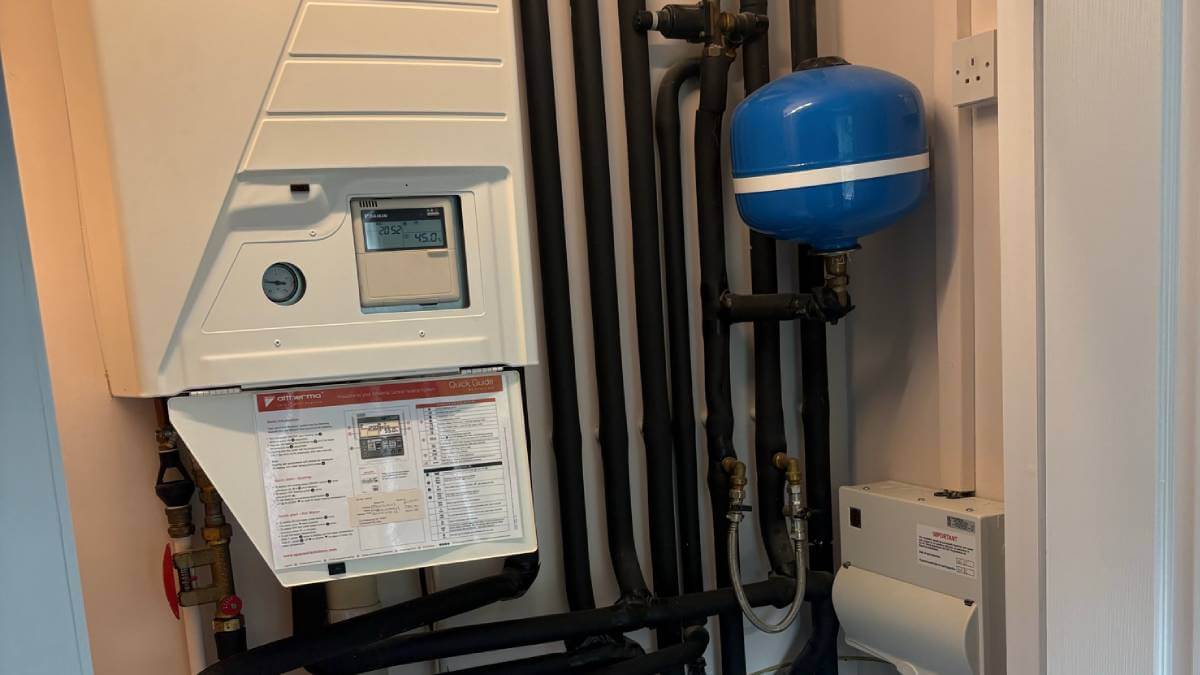
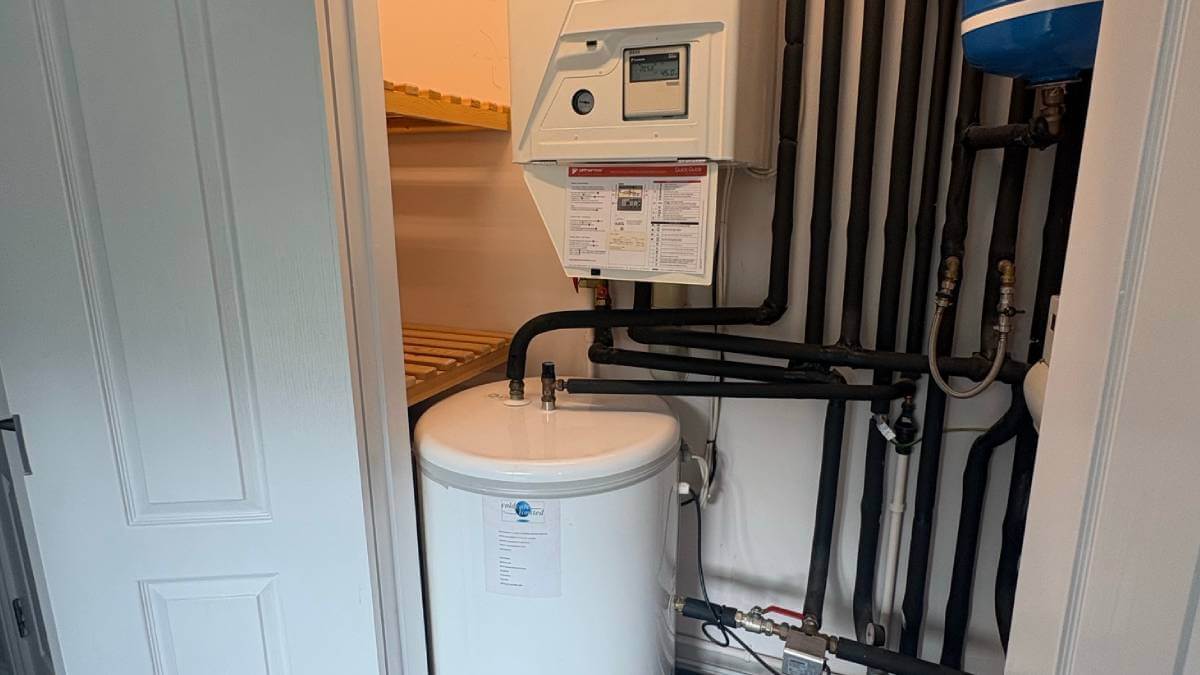
A heat pump is a heating system that extracts heat from the outside air (air-source) or the ground (ground-source) and transfers it into your home. Unlike a boiler that generates heat directly, a heat pump moves heat — which is why, in theory, it can deliver more energy than it consumes.

The key metric here is the Coefficient of Performance (COP) — essentially the efficiency ratio. A well-installed heat pump operating in ideal conditions can achieve a COP of 3 or even 4, meaning for every 1 unit of electricity it uses, it delivers 3–4 units of heat. That’s genuinely impressive on paper.

For this to work as advertised, several conditions need to be met:
 
  • Your home must be well-insulated. Heat pumps work best with low-flow temperature heating systems (typically 35–45°C), compared to a boiler running at 60–70°C. Underfloor heating and large-panel radiators are ideal.
  • Outside temperatures stay relatively mild. The colder it gets outside, the harder the heat pump has to work — and the less efficient it becomes.
  • The system must be correctly sized and commissioned. Undersized units, incorrect refrigerant levels, or poor control configuration can destroy efficiency.
  • When all of these boxes are ticked, a heat pump is a genuinely impressive technology. The problem is that in the real world, those boxes are frequently left unticked.
boiler

Why heat pumps often don’t meet expectations

Heat pumps often disappoint not because the core technology is poor, but because the system around them is mismatched to the home, the tariff, or the user’s expectations.

The biggest reasons are:

  1. Poor installation is rife

The rapid rollout of heat pumps, driven in part by government incentives like the Boiler Upgrade Scheme, has unfortunately outpaced the supply of properly trained installers. We regularly hear from homeowners in Milton Keynes, Northampton and Bedford who had heat pumps fitted quickly and cheaply — only to find they barely heat the house and cost a fortune to run.

  • Incorrect system sizing. Oversized or undersized units fail to operate efficiently. This requires a proper heat loss calculation for your specific property — something many installers skip entirely.

  • Inadequate radiator upgrades. Many installers fit heat pumps without replacing radiators designed for high-temperature boiler systems. The result is a home that’s never quite warm enough, even when the system runs continuously. If you suspect your heating isn’t working properly, read our article on Why your radiators aren’t heating properly — and how to fix them

  • Poor controls setup. Heat pumps need to run longer at lower temperatures — not short, high-temperature blasts like a boiler. If the controls aren’t configured correctly, the system runs inefficiently and bills escalate quickly.

  • No heat loss calculation performed. This should be the very first step. Without it, the entire system is guesswork.

Many installers fit heat pumps without replacing radiators designed for high-temperature boiler systems. The result is a home that’s never quite warm enough, even when the system runs continuously. If you suspect your heating isn’t working properly, read our article on Why your radiators aren’t heating properly — and how to fix them

  2. Local housing stock is often poorly suited to heat pumps

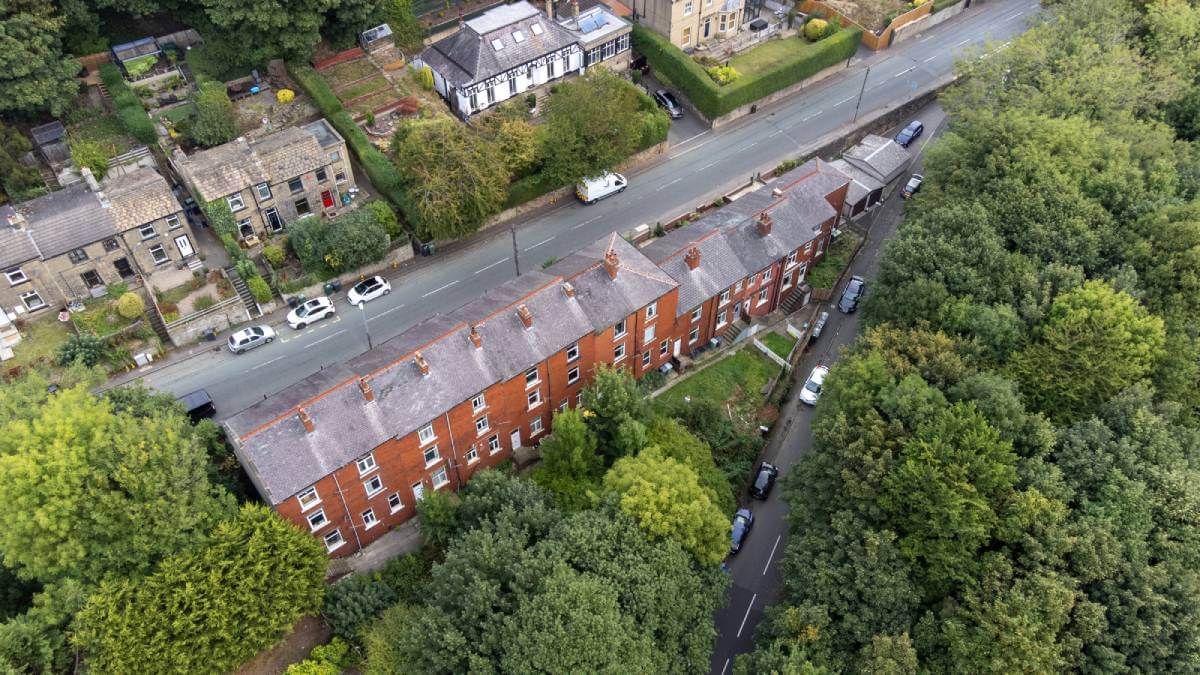
The towns and villages across our service area — from the Victorian terraces of Northampton to the older rural properties around Buckingham and the mix of 1970s and 80s estates common throughout Milton Keynes, Bedford and Leighton Buzzard — present real challenges for heat pump retrofitting.

Heat pumps are fundamentally a technology designed for well-insulated, thermally efficient buildings. Properties with solid walls, uninsulated floors, older double glazing or limited loft insulation require significant — and expensive — upgrades before a heat pump will perform as expected. Retrofitting one without doing that groundwork first is, in many cases, setting it up to fail.
 
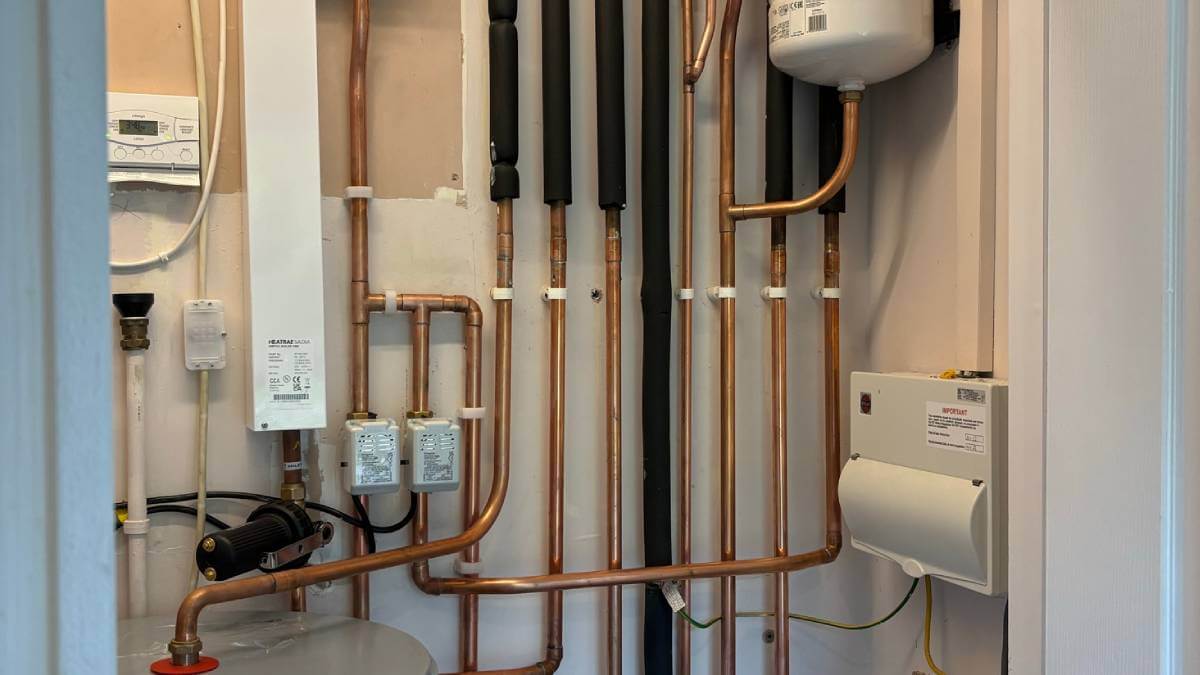
Newer Milton Keynes builds and modern developments in areas like Broughton, Oakgrove or Kingsmead may be better candidates. But even there, the quality of installation makes an enormous difference. In many of these new builds, 10 mm micro-bore pipework is the norm. The low flow rates of these pipes mean a whole new heating system may be required, including replacing pipework in walls and floors.
 
heating pipes

 3. The East Midlands winter is no friend to heat pumps

 
Our region isn’t the coldest in the country, but it’s no pushover either. The East Midlands and surrounding areas regularly experience prolonged cold snaps, with temperatures between 0°C and 5°C for days at a time. This is precisely where air source heat pumps struggle most.
A heat pump’s COP drops significantly as outside temperatures fall. When it gets really cold, many systems automatically switch to a backup electric resistance heating element — sometimes called “auxiliary heat” or “immersion assist.” This element is essentially a large electric heater, and it’s extraordinarily expensive to run. Many homeowners in our area only discover this is happening when a shocking electricity bill arrives.
 

  4. Electricity is expensive relative to gas

This is perhaps the most under-appreciated issue. Even if your heat pump achieves a COP of 3, you need to factor in the price of electricity versus gas.
 
In the UK, electricity currently costs roughly 3–4 times as much per unit as gas, although the exact difference varies over time depending on the energy market and price cap levels. Homeowners can check the latest current energy prices and price cap information through Ofgem.
 
That means your heat pump needs to sustain a COP of at least 3–4 consistently just to match a gas boiler on running costs.
 
In a poorly insulated property, with a poorly installed system, during a cold Northamptonshire winter? Many real-world heat pumps are achieving COPs of 1.5–2.5 — which means substantially higher bills than a gas boiler would.
 
Of course, choosing gas over electricity has an environmental impact. But for most homeowners, affordability isn’t a subject that can be ignored either.
 
heating wires outside

Signs your heat pump may be underperforming

Many homeowners don’t realise their heat pump is underperforming until they notice a significant increase in energy bills or struggle to keep their home warm during colder weather.

Common warning signs include rooms that never reach the desired temperature, a heat pump running almost constantly, excessive reliance on backup heating, or unexpectedly high electricity costs. As experienced heating engineers in Milton Keynes, we often investigate properties where homeowners have been told their system is working correctly, only to discover issues with sizing, installation or system settings.

If you recognise any of the following, your system may not be operating as it should:
 
  • Energy bills that are higher than when you had a boiler
  • Rooms that struggle to reach a comfortable temperature in winter
  • The system is running almost constantly without the home feeling warm
  • Frequent use of the backup electric heater
  • Hot water that takes a long time to reheat
  • An outdoor unit that frosts up heavily and regularly in cold weather
 
These aren’t inherent to heat pump ownership — they’re signs that something has gone wrong with the design, installation, or setup of the system.
 
heat pump inside

When should you replace a heat pump with a boiler?

This is a question we’re asked increasingly often by homeowners across our area, and it deserves an honest answer.
 
Replacing a heat pump isn’t a decision to take lightly — the original installation will have cost several thousand pounds, and it may be your preference, but at this moment in time, there are circumstances where continuing to struggle with an underperforming system simply isn’t worth it.
 
Replacing your heat pump with a boiler may be worth considering if:
 
  • Your bills have increased substantially and haven’t improved despite adjustments, servicing, or control tweaks.
  • If you’ve given the system a fair chance and it’s still costing you significantly more than your old boiler, the economics aren’t working.
  • Your home cannot practically be upgraded to the insulation standard required for a heat pump to operate efficiently. For some properties — particularly older solid-walled homes in areas like Northampton’s town centre or Buckingham’s market town streets — the cost of bringing the building’s fabric up to standard is simply prohibitive.
  • Your household circumstances have changed. A growing family, a home extension, or a change in how you use the property can mean that a heat pump that was borderline adequate is now simply too small for the job.
  • The system was poorly specified from the start. If a proper heat-loss calculation was never performed, the wrong-sized unit was installed, or the radiators were never upgraded, the system’s fundamental design is flawed. Remediation is sometimes possible — but in other cases, starting fresh is more cost-effective.
 
However, before deciding to replace, it’s worth exploring:
 
  • Whether a control or settings adjustment could meaningfully improve performance
  • Whether targeted insulation improvements (loft, floor, or draught-proofing) could bring the COP up to an acceptable level.
  • Whether the system just needs a proper service and re-commission by a specialist
 
At Lime Heating, we’ll always give you a straight assessment of whether remediation makes sense or whether a replacement boiler is the more practical and cost-effective path forward.
 
A note on electric boilers: If your property isn’t connected to the gas network — which applies to many rural properties around Buckingham and outlying villages — an electric boiler can be a straightforward, low-maintenance alternative to a heat pump. Electric boilers are 100% efficient at the point of use, simple to install, quiet, and compact.
 
They don’t achieve the theoretical efficiency of a well-performing heat pump, but they deliver consistent, reliable heat without the complexity, and running costs compare reasonably well against a struggling heat pump. For off-gas properties, they’re well worth considering.
 
boiler room

When a gas boiler is the better choice
Despite the government’s push toward heat pumps, gas boilers remain a highly practical, cost-effective solution for the majority of homes across Milton Keynes, Northampton, Bedford and the surrounding area. A modern condensing gas boiler operates at around 90–94% efficiency and delivers high-temperature heat on demand.
 
A gas boiler may be the more sensible choice if:
 
  • Your home has solid walls or limited insulation that would be expensive to upgrade
  • You rely on standard-sized radiators and don’t want the disruption and cost of replacing them throughout the house
  • Your budget doesn’t stretch to the full package of heat pump, radiator upgrades, hot water cylinder, and insulation improvements
  • You need reliable, rapid heat — gas boilers respond quickly; heat pumps are designed to run slowly and steadily
  • You’ve had a poor experience with a heat pump and simply want a proven, well-understood technology
  • You’re on a tight timeline — a gas boiler replacement can usually be completed in a day; a full heat pump retrofit takes considerably longer
 
This isn’t an argument against heat pumps as a technology.
 
It’s a frank acknowledgement that they are not the right solution for every home or set of circumstances right now.
Before you change how you heat your home, change how well it holds heat.
 
Before considering a heat pump or boiler replacement, it’s worth reviewing your property’s Energy Performance Certificate (EPC). An EPC can help identify areas where insulation and energy efficiency improvements may deliver greater savings than changing your heating system alone.
 
When homeowners are weighing up heat pumps, boilers and heating systems, there’s one course of action that should come first, and it’s arguably more important than any of the technology choices.
 
The single most cost-effective thing you can do to reduce your heating bills and your carbon footprint isn’t to change how you produce heat. It’s to stop losing the heat you’re already producing. A well-insulated home is warmer, cheaper to run, and kinder to the environment, regardless of whether it’s heated by a gas boiler, a heat pump, or another heating system. Conversely, a poorly insulated home will underperform whatever heating system you put in it, as thousands of homeowners with expensive heat pump installations have discovered at considerable cost.
 
Before spending significant money on a heat pump installation, it’s worth asking whether that same money, or even a fraction of it, could be better spent on insulation and draught proofing.
 
Step 1 in any balanced heating conversation should be to keep the heat you’re producing inside your home. Regardless of where you are in your decision-making about whether a heat pump or a new boiler is right for your home, make these changes first, and you’ll reap the benefits.
 
heat pump

The bottom line

Heat pumps are a promising technology, and for the right home — well-insulated, appropriately upgraded, with a skilled installer — they can work very well. But the current rush to install them in homes that simply aren’t ready is creating real problems for homeowners across our region.

As trusted heating engineers in Milton Keynes, we’ve seen first-hand how important it is to choose a heating system that matches both the property and the homeowner’s expectations. A solution that works perfectly in one home may prove expensive and inefficient in another.

At Lime Heating, we install gas boilers and electric boilers across Milton Keynes, Northampton, Bedford, Buckingham, Leighton Buzzard and the surrounding areas. We’ll always give you an honest, no-pressure assessment of what’s right for your property.

If your heat pump is costing you a fortune, or you’re unsure whether a heat pump, gas boiler, or electric boiler is the right fit for your home, get in touch with the team at Lime Heating. We’re here to help you make the right decision.

Get in touch for a FREE quote

Contact us today, and our experts will happily provide you with a free, no-obligation, customised quote for your plumbing and heating needs. Experience transparent pricing and exceptional service with Lime Heating. We look forward to hearing from you!

Contact us